Future Doctors: Pre-Med Resources for Kids & Teens
Thinking about becoming a doctor is exciting! It’s never too early to start exploring the amazing world of medicine and health. The best part is, you don’t need to spend a lot of money to start learning using online pre-med resources for teens and kids.
We’ve put together a list of affordable or low cost pre-med resources for kids to help young future doctors like you on your journey. Many people see the expensive pre-med programs for teens at major universities or summer internships in big cities and think there’s nothing accessible to them. But you can get a good start for free and then upgrade to options that are less than $100 a month!
Free Pre-Med Resources for Kids and Teens
- Khan Academy: This website has in-depth video lessons that explain science topics like biology, chemistry, anatomy, and physiology at various levels. It’s a great place to get a head start on the science classes you’ll take later in school.
- Online Science Games & Videos: Look for educational videos and games about the human body, diseases, and how doctors help people. Many museums and hospitals have free online resources. We have a separate page of those here!
- YouTube: Try searching “day in the life of [career or specialty].” You can do this for any medical specialty or other healthcare career such as trauma nurse, registered dietician, or dental hygienist. Also look up “patient story [name of disease]” or “patient education [name of disease]” to see what it’s really like to have a particular medical condition.
- Reading Books: Check out books at your local library about famous doctors, the history of medicine, or what it’s like to be a doctor today. This is a great way to learn and get inspired! Some libraries have a service to create a recommended reading list and this can be a great way to find books!
- Local Hospitals: Often hospitals will have programs to expose youth to medical careers. Try searching “high school [name of hospital] [name of city]” online.
- High School Alliance of Future Physicians (HSAFP): A non-profit organization that provides free guides, checklists, and virtual clinical experience opportunities specifically for high school students.
- I Want to Be a Doctor Podcast: This show is a great way to hear from a real doctor about the medical journey. Dr. Robin shares tips and inspiration for anyone thinking about a career in medicine. It’s a perfect listen for your drive to school or while you’re doing chores!
Low Cost Pre-Med Resources for Kids and Teens
- Summer Science Programs: Skip the Ivy League universities–you don’t need a brand name science program to get a good experience! Look at high school summer programs at local universities or museums. These can usually range from under $100 to several hundred dollars or more. Higher cost doesn’t necessarily mean better. Look at the details of the actual experience.
- MedPath from Dr. Robin’s School: This is an affordable, step-by-step curriculum designed to make learning about a future in medicine accessible to all future healthcare clinicians. It is designed to help build scientific and clinical thinking skills while learning human biology and medical science. It includes lessons, hands-on activities, and a community for students who are curious about becoming doctors. The cost ranges from $10 a month for basic anatomy to $75 a month for anatomy, physiology, labs, clinical cases, and book club.
- MEL Medical Science: This kit is currently $75 a month and provides a monthly subscription box. If the price is steep, here’s a tip: you can purchase almost everything for significantly less on Amazon. MedPath (in the next item) will teach you the in-depth medical science of how each piece of medical equipment works.
Doing Well in School as a Pre-Med Kid or Teen
- Math: If you struggle in math, seek out online resources such as YouTube channels devoted to math or use a book. I personally found Barron’s The Easy Way series to be enormously helpful! Khan Academy is also a great free resource for math help. Do not rely on AI to help you through math classes–you need to really understand the material!
- Science: When you learn science, it’s really important to spend most of your time thinking and figuring out, not just remembering/memorizing. When you get to higher level science, there will be too much information to just memorize. And of course, healthcare professionals spend their time thinking, not matching vocabulary or sharing facts. In fact, my Family Medicine board exam is entirely open book because the question is not whether you memorized the information…it’s whether you can think about it!
- Communication: Medical professional need to be exceptional communicators. Spend time learning how to teach others, help others feel heard and understood, and so forth. Communication is critical for gathering information about a patient’s symptoms, also!
- Small Motor Skills: Many people never learn to sew, knit, decorate cakes, or solder circuits. But these sorts of hobbies help develop small motor skills that will help you use your hands more effectively as a physician, nurse, dentist, or other clinician.
Create a Good Pre-Med Application
- Keep a record of your volunteer work, job experiences, and accomplishments to use on your application.
- Find Your Mentors: Build good relationships with your teachers, coaches, and counselors. They can write strong letters of recommendation for you that highlight your best qualities.
- Tell Your Story: Your personal statement is a chance to tell a unique story about why you want to be a doctor. Think about a time you were inspired by a doctor, a challenge you overcame, or a moment that sparked your passion for medicine.
- Choose Meaningful Activities: Instead of doing a little bit of everything, find a few activities you truly love and stick with them. Look for leadership roles or ways to show long-term commitment.
- Get Experience: It’s important to see what it’s really like to work in healthcare. Try to find a chance to shadow a doctor for a day or volunteer at a local hospital or clinic. This experience shows your commitment and helps you understand the day-to-day life of a medical professional.
Why I Created This Page
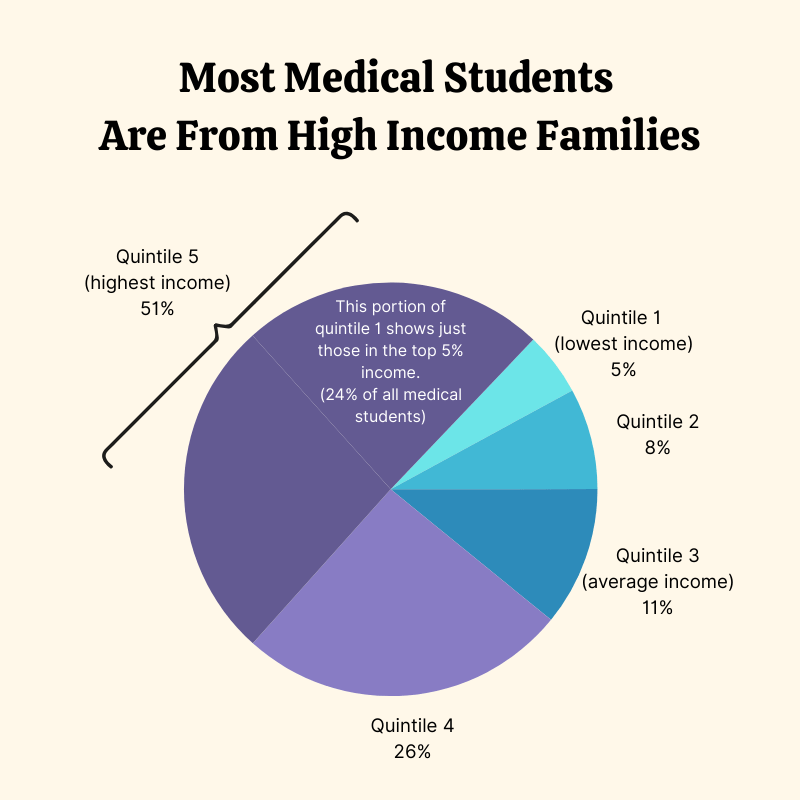
Because a medical career isn’t just for the top 20%. But in the United States, that’s who research shows is in medical school. Half of all students in medical school in a recent study are from the top income quintile. Another quarter are in the second highest income quintile. That means that only a quarter of medical students are from AVERAGE income families or below! That is shocking. Every kid and teen should have the opportunity to have a medical career. But for most people, that is out of reach. I made this page to provide some starting resources for families who want to support an aspiring physician.
 Free and Affordable Pre-Med Resources for Kids and Teens